
Navi Mumbai - 400701, Maharashtra, India +91 9152937501
POWER DISTRIBUTION SOLUTIONS

PCC Panels Manufacturer and Supplier

At Vedant Electrical & Services, we manufacture and supply Power Control Centre (PCC) Panels for industrial and commercial electrical power distribution applications. We design our PCC panels around the required incoming supply, connected load, outgoing feeders, protection requirements, metering arrangement, and installation conditions.

Based in Rabale, Navi Mumbai, Maharashtra, we serve customers looking for a PCC panel manufacturer in Mumbai, a PCC panel supplier in Mumbai, and customized electrical panel solutions for requirements across India.

Our in-house design capability lets us develop application-specific PCC panel configurations, while our manufacturing team focuses on component layout, electrical connections, enclosure construction, and quality-focused manufacturing.
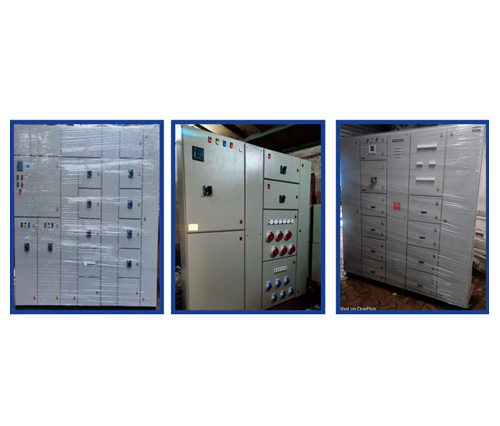
PCC Panels Manufacturing by Vedant Electrical & Services

What Is a PCC Panel?

A Power Control Centre (PCC) Panel is a low-voltage electrical panel used for receiving, controlling, protecting and distributing electrical power to multiple outgoing feeders.

In a typical installation, the PCC panel receives power from a transformer, generator, utility supply, or another designated source. The incoming power passes through the main switching and protection arrangement before reaching the busbar system. From the busbars, electrical power is distributed through individual outgoing feeders to machines, motors, sub-distribution panels, and other connected loads.

A PCC panel therefore acts as a centralized point for power distribution, switching, protection, metering and monitoring.

How Does a PCC Panel Work?

A PCC panel generally performs four main functions:

1. Incoming Power Supply

Electrical power enters the PCC panel through one or more designated incoming feeders. Depending on the electrical system, the source may be a transformer, DG set, utility supply or another power source.

2. Switching and Protection

The incoming section incorporates suitable switching and protection equipment. Depending on the design, this can include ACBs, MCCBs, isolators, protection relays, and other devices required for the electrical system. These devices allow the incoming supply to be controlled and help isolate electrical faults or abnormal operating conditions.

3. Busbar Power Distribution

The incoming supply is transferred to the main busbar system. The busbars provide a common electrical distribution path for the outgoing feeders. Busbar material, cross-section, current-carrying capacity, supports, and arrangement are selected according to the electrical design and required current rating.

4. Outgoing Power Distribution

Individual outgoing feeders take power from the busbar system and supply connected loads such as machinery, motor control centres, process equipment, HVAC systems, pumps, sub-distribution panels, and other electrical systems. The outgoing feeder arrangement is customized according to the number and type of loads.

PCC Panel Technical Specifications

Standard specifications and project-dependent parameters for Power Control Centre panels.

Parameter Typical / Project-Dependent Specification
Panel TypePower Control Centre (PCC) Panel
ApplicationLow-voltage power distribution
Supply SystemTypically 3-phase AC
Operating VoltageCommonly 415V AC in Indian LV systems
FrequencyTypically 50 Hz
Current RatingApproximately 100A to 6300A, depending on design
Short-Circuit Withstand / Fault LevelProject-dependent; values such as 50kA, 65kA or higher may be specified
Busbar MaterialCopper or Aluminium
Incoming DeviceACB / MCCB or as per design
Outgoing ProtectionMCCB / ACB / other suitable protection
MeteringDigital / Multifunction metering as required
ProtectionOverload, short-circuit, earth-fault and other functions as applicable
EnclosureSheet-steel construction as per approved design
MountingGenerally floor-mounted for main PCC assemblies
Cable EntryTop / bottom / as per site requirement
Form of SeparationAs specified by project requirements
IP ProtectionTo be selected according to installation conditions
DimensionsCustomized according to components, feeders, and site space
Busbar ArrangementAs per load and fault-level calculation
StandardApplicable IS/IEC requirements as specified for the project
CustomizationAvailable according to approved electrical requirements

Types of PCC Panel Configurations

Main PCC Panel

A Main PCC Panel acts as a centralized power distribution point, receiving electrical power from the main source and distributing it to multiple outgoing feeders.

Multiple-Incomer PCC Panel

Where an installation has more than one power source, the PCC can be configured with multiple generators according to the required electrical arrangement.

PCC Panel with Bus Coupler

A bus coupler arrangement can be incorporated where the electrical system requires sectionalized busbars and controlled interconnection between sections.

Sub-Main PCC Arrangement

A sub-main distribution arrangement can distribute power from the main electrical system to different plant sections, buildings, or load groups.

Customized PCC Panel

A customized PCC panel is designed around the customer's electrical drawings, feeder requirements, load characteristics, protection scheme, and available installation space. The actual configuration should always be finalized according to the approved electrical design.

Applications of PCC Panels

PCC panels are commonly used wherever centralized low-voltage power distribution is required:

Manufacturing Plants

PCC panels can distribute electrical power to production machinery, downstream panels, auxiliary equipment, and plant services.

Process Industries

They can distribute power to process equipment, pumps, motors, and associated electrical systems.

Chemical and Pharmaceutical Facilities

PCC panels can be incorporated into electrical distribution systems supplying process equipment, utilities and plant services.

Cement Plants

High-load industrial installations can use PCC panels to distribute power to production equipment, material-handling systems and auxiliary loads.

Steel and Metal Industries

PCC panels can support centralized distribution for high-load industrial equipment and associated plant systems.

Water Treatment Plants

They can distribute power to pumping systems, filtration equipment, treatment equipment, and other electrical loads.

HVAC Systems

PCC panels may be used for centralized distribution to chillers, pumps, air-handling equipment, compressors, and other HVAC loads where applicable.

Commercial Buildings

Large commercial facilities can use centralized power distribution panels for multiple building services and downstream electrical systems.

Infrastructure & Utilities

PCC panels can form part of electrical distribution systems used in infrastructure, utility, and large facility projects.

PCC Panel vs MCC Panel

PCC and MCC panels serve different primary purposes in electrical systems:

PCC Panel MCC Panel
Power Control Centre Motor Control Centre
Primarily used for power distribution Primarily used for motor control
Distributes power to multiple outgoing feeders Controls and protects motor feeders
Can supply downstream MCCs and distribution panels Supplies and controls motor-driven equipment
Focuses on centralized power distribution and protection Focuses on motor starting, control and protection
May contain ACBs, MCCBs, metering and protection May contain starters, contactors, overload relays, MCCBs and VFD-related equipment

In many industrial installations, PCC and MCC panels can work together: the PCC distributes power, while the MCC manages motor-related loads.

PCC Panel Manufacturing Process

At Vedant Electrical & Services, the manufacturing process can be planned around the approved electrical requirements and panel design.

01 Requirement Review

We review the customer's electrical requirements, drawings, feeder details, and installation conditions.

02 Panel Design

The panel configuration, component arrangement, dimensions, and feeder layout are developed according to the approved requirements.

03 Material and Component Selection

Suitable enclosure materials, switchgear, busbars, metering devices, and other components are selected according to the design.

04 Panel Fabrication

The enclosure and structural components are fabricated according to the finalized dimensions and construction requirements.

05 Component Assembly

Switchgear, busbars, meters, protection devices, terminals, and other components are installed according to the approved arrangement.

06 Wiring and Connections

Power and control wiring is completed with appropriate identification and termination according to the panel design.

07 Inspection and Testing

The completed panel is inspected and tested according to the applicable project requirements before dispatch.

Why Choose Vedant Electrical & Services for PCC Panels?

Experienced Manufacturer

Established in 2013, Vedant Electrical & Services manufactures and supplies different types of electrical panels for industrial and commercial requirements.

In-House Design Capability

Our in-house design unit allows us to work on customized panel configurations based on application and project requirements.

Application-Specific

We do not treat every PCC panel as a standard configuration. Panel dimensions, feeder arrangement, and internal layout are tailored accordingly.

Quality-Focused Approach

We focus on suitable raw materials, component arrangement, manufacturing quality and inspection throughout the panel-building process.

Customized Solutions

We discuss project-specific requirements such as feeder configuration, metering, protection, dimensions, cable entry, and installation conditions.

Bulk Requirements

Our manufacturing setup can support bulk panel requirements subject to finalized specifications, quantities, and project schedules.

Service and Support

Our panel-related services also include servicing, modification, and retrofitting requirements where applicable.

Frequently Asked Questions About PCC Panels

Get answers to common queries about Power Control Centre (PCC) panels.

A PCC panel is used for centralized low-voltage electrical power distribution. It receives power from a designated source and distributes it through protected outgoing feeders to different loads, machines, downstream panels, or electrical systems.

PCC stands for Power Control Centre. A PCC panel is used primarily for centralized power distribution, switching, protection, and monitoring.

A PCC panel is primarily used for centralized power distribution, while an MCC panel is primarily used for controlling and protecting motor feeders. PCC and MCC panels can work together within the same industrial electrical distribution system.

Depending on the design, a PCC panel may include ACBs, MCCBs, busbars, CTs, multifunction meters, protection relays, indication devices, terminals, internal wiring, and an electrical enclosure.

Many Indian low-voltage power distribution systems use 415V AC, 3-phase, 50Hz, but the actual voltage and electrical configuration must be confirmed from the project requirements.

PCC panels can be engineered for different current ratings. Industry offerings commonly include configurations ranging from around 100A to 6300A, but the appropriate rating depends on the connected load and electrical design.

The required fault level depends on the electrical system's short-circuit calculation. PCC panel offerings can be designed for different fault levels, including values such as 50kA and 65kA or higher, subject to the selected equipment and construction.

Yes. PCC panels can be customized according to the incoming supply, current rating, outgoing feeders, busbar arrangement, protection, metering, dimensions, cable entry, and installation requirements.

Yes, where required by the electrical system, a PCC can be configured with multiple incoming feeders and associated bus-coupler or sectionalized busbar arrangements.

Yes, a PCC can receive power from a DG set where the electrical distribution design calls for it. The incomer arrangement, protection, and synchronization or changeover functions should be designed according to the complete power system.

Maintenance frequency depends on the panel's operating environment, load, electrical system, and manufacturer's recommendations. Periodic inspection can help identify loose connections, component deterioration, abnormal heating, and other potential issues.

For a more accurate quotation, provide the single-line diagram, transformer/DG details, connected load, incoming rating, outgoing feeder schedule, fault level, metering requirements, installation dimensions, and applicable project specifications.